
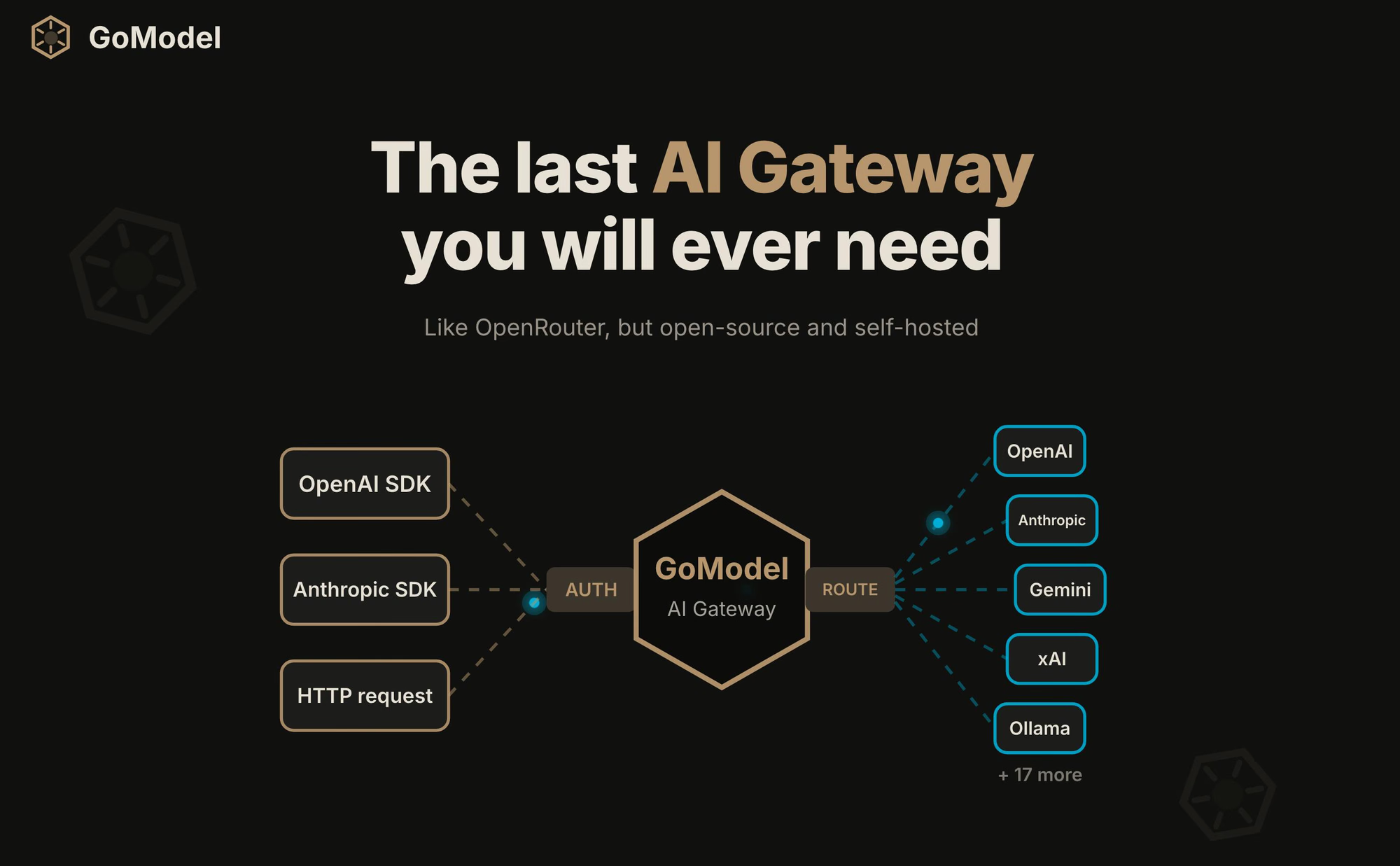
GoModel is an open-source AI gateway written in Go that exposes a single OpenAI- and Anthropic-compatible endpoint for 31 providers. It includes budgets, caching, guardrails, load balancing, failover, aliases, scoped workflows, audit logs, and usage tracking. It ships as a single binary with a ~20MB Docker image under an MIT license, using bring-your-own keys, and positions itself as a self-hosted alternative to OpenRouter and LiteLLM.

GoModel
Open-source OpenRouter
GoModel Introduction
Key Features
- One OpenAI- and Anthropic-compatible API for 31 providers
- Budgets, caching, and guardrails
- Load balancing and failover across providers
- Aliases and scoped workflows
- Audit logs and usage tracking
- Single binary deployment with ~20MB Docker image, MIT licensed, bring your own keys
Use Cases
- Routing LLM requests across multiple providers through one unified API
- Self-hosting an AI gateway to control costs, usage, and failover
- Enforcing budgets, guardrails, and audit logging for AI workloads
Why Startups Use It
Startups can self-host GoModel to unify LLM access across 31 providers behind one API, with built-in budgets, caching, failover, and usage tracking—without vendor lock-in or per-request gateway fees.
Alternative Options
OpenRouter, LiteLLM
Frequently Asked Questions
Is GoModel open source?
Yes, GoModel is open source under the MIT license.
Which API formats does GoModel support?
It provides a single OpenAI- and Anthropic-compatible endpoint that works with 31 providers.
How is GoModel deployed?
It runs as a single binary or via a ~20MB Docker image, with bring-your-own API keys.
More About GoModel
PricingPaid
Listed DateSep 10, 2026
Authority Badge
Add our badge to your website to showcase product credibility and listing status.

Featured List